How to Become the Source Google AI Answers Cite
On Oct 15, 2026 Google added more links to AI Mode and AI Overviews answers. How to become a cited source and how to track it in Search Console.
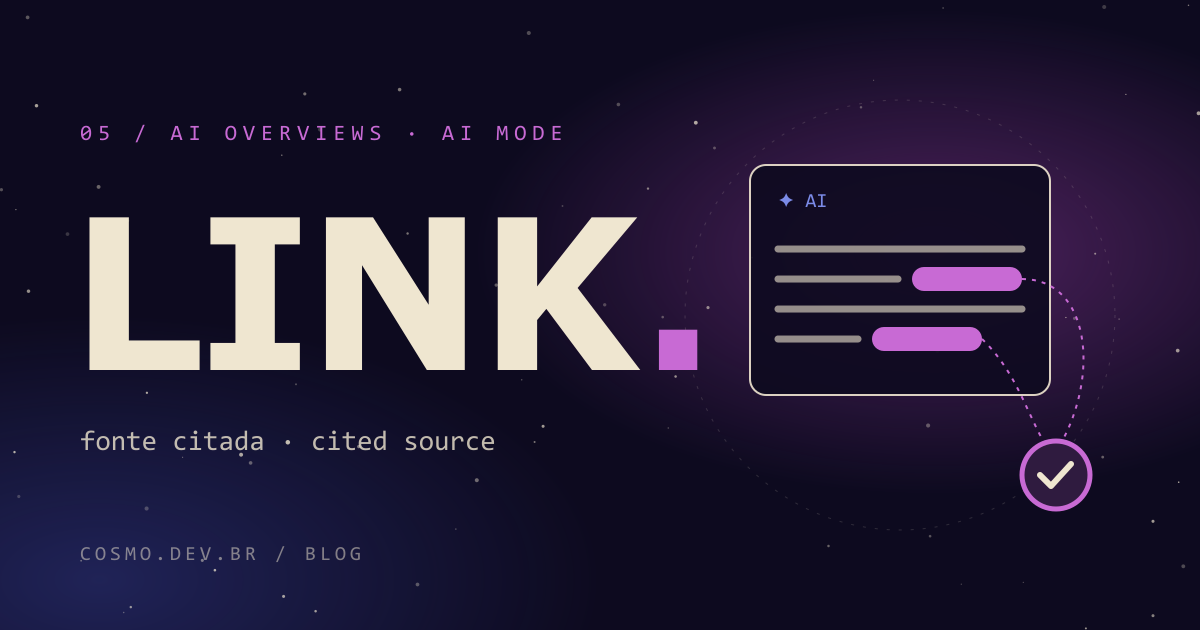
Ask Google “how much does a phone screen repair cost in my city” and you are increasingly getting a ready-made paragraph instead of a list of links. The good news, announced on October 15, 2026: that paragraph is going to cite more sites, more prominently. The real question is how to make your business one of them.
What changed on October 15
In a post on Google’s official blog, Hema Budaraju, VP of Product, announced changes to how AI answers in Search point to the web:
- More inline links inside AI Mode and AI Overviews answers, placed higher up.
- A test of a top section in the answer linking to official sites.
- News carousels in more languages and regions.
- Thumbnails on the “explore further” links.
Search Engine Roundtable covered it too. One key detail: Google does not share click data for these answers. Nobody has an official number for how much traffic one of these links actually sends.
Why being the cited source is prime real estate
Even without click data, the logic holds. When the AI answer sits at the top of the page, whoever is cited inside it stands in front of everyone listed below. It is the shop window versus the back room.
And Google keeps bringing AI to the places where small businesses live. At Google for Brasil 2026, on June 10, it announced:
- Gemini features for small businesses built into Google Business Profile (reviews, bookings, metrics);
- agentic features in AI Mode, such as making reservations;
- Gemini in Chrome in Brazil.
If AI is going to book the table or the appointment on the customer’s behalf, it needs reliable information about your business. Whoever has that information in order gets a head start.
How to measure it: Search Console’s AI report
On June 3, 2026, Google Search Central announced generative AI performance reports in Search Console. Here is what they cover:
| Shows | Doesn’t show |
|---|---|
| Impressions in AI Overviews, AI Mode and Discover | Clicks |
| Breakdown by page, country, device and date | Queries (what people asked) |
The caveat: the report was rolled out to a subset of sites. If yours doesn’t have it yet, it is not a setup problem.
How I use the data, with or without the report:
- Pages with AI impressions: see which pages show up and compare them with the ones you want to show up.
- Indirect effects: track branded searches, leads and direct visits. Brand exposure tends to surface there.
- Manual checks: once a month, ask Google the 5 to 10 most important questions in your business and note who gets cited.
Checklist: becoming the source Google picks
None of this is a trick. It is the basics done well, which is exactly what most small business sites are missing. For the writing side in more depth, see the GEO article.
1. Structured data
JSON-LD tells Google, unambiguously, who the business is, where it is and what it does. A starting point for a local business:
<script type="application/ld+json">
{
  "@context": "https://schema.org",
  "@type": "LocalBusiness",
  "name": "Business Name",
  "url": "https://dominio.com.br/",
  "telephone": "+55-00-0000-0000",
  "address": {
    "@type": "PostalAddress",
    "addressLocality": "City",
    "addressRegion": "State",
    "addressCountry": "BR"
  },
  "sameAs": [
    "https://www.instagram.com/yourbusiness",
    "https://www.linkedin.com/company/yourbusiness"
  ]
}
</script>
Add Service on service pages and FAQPage wherever you have questions and answers. The full technical setup is in the AI-ready website article.
2. A complete Business Profile
With Gemini built into Google Business Profile, it is no longer just “the pin on the map”. Hours, categories, services, photos, bookings and review replies are raw material for AI. And it all has to match your website.
3. Service pages that answer real questions
A “Services” page with three icons and “tailored solutions” answers nothing. One page per service, answering what customers actually ask, is far more likely to become a cited passage:
- What is included, and what isn’t?
- How long does it take?
- How does pricing work?
- Do you serve my area?
Answer at the top of each section. Models retrieve passages, not whole pages.
4. Brand and authorship signals
Who is behind the business, for how long, with what experience. A real About page, bylines on articles, company registration and address in plain sight, social profiles that match the site (sameAs). With Google testing a section that links to official sites, making it obvious that your site is your brand’s official one matters more than ever.
5. Fresh content
Prices from 2023, outdated hours and discontinued services erode trust. Review your key pages regularly and show the update date, both on the page and in the structured data’s dateModified.
The counterpoint: the shop window is getting ads too
It would be naive to treat AI answers as purely organic territory. In August, Meio & Mensagem reported that ChatGPT started an ad pilot in Brazil on the Free and Go plans, shown only in conversations with commercial intent, below the answer and labeled as sponsored.
So space in AI answers will be contested between cited sources and paid placements, just like classic search was. That doesn’t make organic matter less. It makes showing up late more expensive, because whoever is already the go-to source doesn’t have to pay to be remembered.
One-screen summary
- Page indexed and eligible for snippets in Search
- JSON-LD for
LocalBusinessorOrganization,ServiceandFAQPage - Google Business Profile complete and consistent with the site
- One page per service, answering real questions up front
- About page, authorship, company details and consistent social profiles
- Visible update dates and reviewed content
- Search Console AI report monitored (if available) plus monthly manual checks
Want your site to be the source AI cites when someone asks about your service? That is exactly the kind of project I take on: let’s talk.
Frequently asked questions
Do I need special markup to show up in AI Overviews?
There is no AI-specific markup. The page must be indexed and eligible to show a snippet in regular search. Structured data, clear content and a complete Business Profile help Google understand who you are and what you offer.
How do I know if my site appears in Google’s AI answers?
If your site has access, Search Console’s generative AI performance report shows impressions in AI Overviews, AI Mode and Discover by page, country, device and date. It does not show clicks or queries. If you don’t have access yet, manually test the most important questions in your niche.
Does getting cited by AI bring clicks?
It can, but Google does not publish click data for these answers. Treat citations as brand exposure and measure the indirect effect: branded searches, leads and visits to the cited pages.
Can small businesses compete with big sites?
On local, specific questions, yes. A service page that answers exactly what customers ask, backed by a well-maintained Business Profile, competes better than a generic article on a large portal.